The governance infrastructure
for trustworthy AI
TTIC is the independent strategic intelligence and decision infrastructure for boards and C-suite leaders governing consequential AI, and for the investors who fund it. We provide the foresight, evidence, standards, and decision architecture that give accountable leaders clarity to exercise their own authority.
Effective AI governance is where clinical value and financial value converge. For medtech, that means margin lift and expansion. For health systems, it means balance sheet protection, stronger insurance underwriting, and bond rating defense. AI capability only delivers on valuation when governance infrastructure is built to earn and hold trust · at the bedside and on the balance sheet.
how to use this site
If you lead a health system north of $4 billion, own the P&L for a medtech business whose customers are the people named in this letter, sit on the board of one of these health systems or their strategic medtech partners, govern player health for a professional sports organization, allocate capital inside these institutions as a finance leader, or conduct diligence on the companies that serve them, this site is built for you. You are the person who signs off when something goes wrong, whose name appears on the bond covenant, the contract clause, the board minute, and the investment memo.
About TTIC
TTIC is the independent strategic intelligence and decision infrastructure for boards and C-suite leaders governing consequential AI, and for the investors who fund it. We provide the foresight, evidence, standards, and decision architecture that give accountable leaders clarity to exercise their own authority. TTIC brings together practitioners and investors across medicine, cybersecurity, engineering, standards, law, operations, and finance.
Building the control layer
for high-risk AI
TTIC is the independent strategic intelligence and decision infrastructure for boards and C-suite leaders governing consequential AI, and for the investors who fund it. We exist to solve a problem most investors and health systems now recognize: AI scales faster than governance.
Most health systems are not waiting for permission to deploy AI. They are already living with the consequences of having deployed it. The operational and cultural challenge is not knowing what the right thing to do is. It is having the unambiguous, defensible framework to actually do it. TTIC’s role is to make the “what to do” clear, credentialed, and actionable under adversarial conditions.
Our cross-standard execution model integrates IEEE/UL 2933, the OWASP GenAI Security framework, NIST AI RMF, and ISO/IEC 42001. We don’t translate standards. We operationalize them.
Co-founded by Sherri Douville and Mitch Parker, TTIC convenes the practitioners and executives who cannot afford to get it wrong.
Trust fails between disciplines.
Health systems already have physicians on staff. They already have engineers, cybersecurity leaders, and lawyers. Expertise inside each discipline was never the gap.
The gap sits at the seams: the points where a clinical requirement has to become an engineering specification, where an engineering control has to become a cybersecurity control, where a cybersecurity finding has to become a governance obligation a board can act on. TTIC was built to own the seams between disciplines. A seam is the point where a requirement, a decision, or a piece of evidence has to cross from one discipline into another without getting lost, delayed, or reinterpreted.
A single AI deployment decision crosses six of these seams on its way from idea to accountable operation:
- Medicine
- Research
- Engineering
- Cybersecurity
- Law & Governance
- Executive Operations
TTIC integrates the requirements, evidence, dependencies, handoffs, and accountability that move a decision through every seam in that chain. That integration work, not the roster of disciplines represented, is what distinguishes the consortium.
TTIC’s membership network is organized around the institutional functions required to staff that chain. See how the network is structured →
The same chain repeats at the level of standards, from a published standard to institutional practice. See how TTIC closes that gap →
What are you responsible for?
Go directly to the resources relevant to what you own. Click on your responsibility area of ownership.
Guided by AI ICE
The behavioral and operational compass ensuring AI is deployed responsibly, ethically, and for the greater good of patients and providers.
Where TTIC writes the rules
TTIC leadership holds authorship and co-chair positions across the standards governing AI deployment in healthcare · not as commentators, but as architects.
in Operations
The Singapore Model AI Governance Framework (January 2026) identifies resource management and operational boundaries as a governance concern in agentic AI systems. No major governance frameworks currently specify technical mitigations for resource exhaustion and token-level attacks as a required control.
TTIC's early access certification requires demonstrated enforced controls for resource exhaustion as a Tier 1 requirement, consistent with the OWASP Agentic AI Security guidance. Certification candidates must show that rate limiting and token-level boundaries are enforced as blocking rules, not advisory policies.
TTIC PositionClick the card to understand why accreditation is not a formality. it is the difference between a governance framework that holds and one that doesn't.
What the consortium has built, verified, convened, and been recognized for

Governance through SLOs
Service Level Objectives (SLOs) are not technical metrics. They are executive-grade control mechanisms that give CIOs, CISOs, CMIOs, CFOs, and boards a shared language for measuring AI accountability in real time. Click any card · or watch them turn.
Most health systems are already past the point of careful planning. AI is in production. The question is no longer whether to govern it. It is how to govern it now, with what you have, in real time.
Built for Those Who Save Lives
With Accountability to Boards, Oversight, and Capital
TTIC’s founders and team write the standards, build to them by example, and deploy them across every function required to govern, build, deploy, implement, integrate, and maintain AI across the full lifecycle. In this combination, we stand alone.
TTIC originated from a Taylor & Francis-commissioned book series and continues to publish practitioner-grade resources used in ANSI-accredited standard review cycles. Taylor & Francis is one of the world’s leading academic publishers, with a portfolio spanning medicine, engineering, and social science.
Our focus is on operationalizing the Taylor & Francis AI policy framework into multidisciplinary books that meet the practical challenges and opportunities of the AI era, resources designed for the executives, clinicians, technologists, and standards authors who have to make governance work under real-world conditions.
Series editor at Taylor & Francis. Led the TTIC contribution to the authorship of ANSI/HSI 2800:2025. AIMed Advisory Board. Combined Sciences, Santa Clara University. MIT AI/ML coursework. Johnson & Johnson alumni spanning a dozen disease areas. Former Series 7 and Series 66 licensed · uniquely tying clinical impact to technical architecture, and bond ratings to underwriting and financial impact.
Converts cybersecurity and technical strategy into operational metrics, driving the operational foundation that data and AI require for long-term success. Mitch helped drive the work at IU Health referenced by CHIME as a role model for third-party AI governance · the standard that anchors TTIC’s framework. Pushes the leading edge of efficiency and productivity in cybersecurity and AI at the institution, regional, and industry level.
Co-designer of Extended Biodesign for AI. The practicing physician voice in TTIC’s standards work, bridging clinical practice and governance.
Industry leader in healthcare cybersecurity and organizational resilience, bringing operational depth and strategic expertise to TTIC’s governance framework.
Chairs TTIC’s compliance domain. Pioneering healthcare cybersecurity risk management and AI security at enterprise scale.
Leads TTIC’s clinical integration domain. Drives the translation of governance standards into practical clinical workflows and deployment readiness.
Executive sponsor bringing the health system CIO perspective · operational accountability for AI governance at a major regional health system.
Chairs TTIC’s AI security domain. Founded the OWASP Top 10 for LLM Applications. Author of O’Reilly's award-winning The Developer's Playbook for Large Language Model Security.
Chief Healthcare Information Technology Officer at Santa Clara County Health System. Partnering with TTIC Chair to adapt the Taylor & Francis AI policy framework to publishing and AI in IT.
Series Editor at Taylor & Francis and CEO of Marx Advisory. Former CIO of Cleveland Clinic, serial health system board director, and bestselling healthcare author. Publishing sponsor and coach to TTIC’s book series, bringing a legacy of enterprise leadership to our governance infrastructure work.
Brings venture finance and capital markets expertise to TTIC's governance work. Managing Partner of TCBONDI CPA, INC., advising healthcare and life sciences organizations on financial strategy, investment readiness, and fiscal accountability in AI deployment.
Brings IP and legal expertise to TTIC's governance infrastructure. Chair of the MedTech Practice at Buchalter, advising healthcare and life sciences organizations on intellectual property, governance strategy, and legal accountability in AI and medical technology deployment.
Expert in leadership communications and high-stakes presentations. UC Berkeley and Duke MBA. Brings 18 years of technology startup experience and 16 years of event production to TTIC’s communications and community mission.
In an industry where healthcare finance and patient care are inseparable from federal and technology policy, Mari keeps the TTIC leadership team grounded in up-to-the-minute Washington D.C. realities impacting patients, clinicians, and hospitals.
Chairs TTIC’s professional sports technology domain, applying health AI governance frameworks to elite athletic performance and sports medicine contexts.
Brings enterprise IT experience and back-end engineering leadership to harden and scale TTIC deployments. CEO of AppFaktors, with growing depth in healthcare AI infrastructure.
As a patient and family advocate and patient family board member, Kristi advocates for well-governed, secure, and efficient deployment and integration of AI to drive the transformation of healthcare. In addition to the patient and family voice, she brings substantial leadership and experience in entrepreneurial AI and the impact that foundations have on higher education and healthcare.
Chaired the ANSI/HSI 2800:2025 working group, bringing clinical AI deployment experience from Stanson Health to TTIC’s standards operationalization work.
Seasoned venture capitalist and board director with deep expertise in life sciences and healthcare innovation. Brings investor-grade rigor and board-level governance insight to TTIC's mission of trustworthy AI deployment across clinical and life sciences contexts.
Translates complex AI governance and standards work into accessible narratives for broad healthcare audiences. Brings entrepreneurial energy and platform reach to advancing TTIC’s mission of trustworthy AI in healthcare.
Brand ambassador advancing TTIC’s presence and mission across the healthcare AI governance community.
Brand ambassador and co-creator of the Making Healthcare Work for You show. Focused on human-centered healthcare solutions and bringing the patient and community voice to TTIC’s governance mission.
Six works that defined the field
Taylor & Francis, Springer, and Artech House. The Taylor & Francis titles by Sherri Douville directly informed ANSI-accredited standard review cycles.
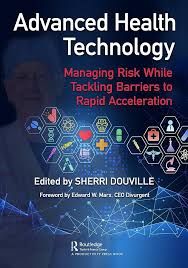

In the guest's own words: “The book is important because it brings together experts from a wide variety of fields, the top minds in law, cybersecurity, risk, medicine, human capital, psychology, to name a few areas, to provide perspective, experience and knowledge that can guide leaders to implementing health tech systems that will foster partnership and collaboration between administration, tech departments and medical staff while mitigating institutional risk.”
Listen to the episode →Awards & honors
Validation from the clinical, technical, and standards bodies whose recognition is hardest to earn.
Standards at work
TTIC’s standards are embedded as governance infrastructure across two distinct tiers: the institutions setting the clinical standard of care, and the frameworks governing procurement across the industry.
Governance Module
Contract Standard
Standard
From the TTIC Community
Original analysis, practitioner reflection, and leadership perspective on AI governance, standards implementation, and the disciplines required for responsible technology adoption in high-performance, high-reliability industries including healthcare, medtech, and pro sports. Posts are published here and on LinkedIn Articles depending on content type.
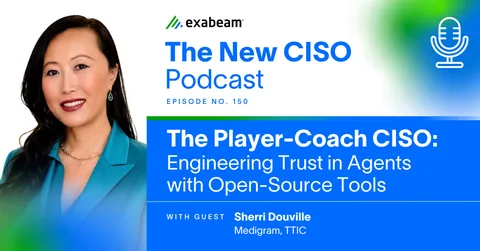
From standards to execution. agentic AI governance in practice

The C-Suite Guide to Agent Governance
Agentic AI doesn't just think. it acts. Executes workflows, triggers communications, updates records. For CISOs, CIOs, CMIOs, and CFOs, AI governance is no longer just a policy. It is now a core part of operational risk and internal controls.
Sherri Douville breaks down the four-lens governance framework and shares the #1 tip for securing agents at scale. grounded in ANSI/HSI 2800:2025.
Watch on LinkedIn ↗Openly Accessible
The standards and tools that govern healthcare AI are public infrastructure. The following resources are available to anyone without joining TTIC or engaging with the consortium.
Purchase on IEEE ↗
Purchase on ANSI ↗
OWASP GenAI Project ↗
Explore Praxen ↗ · Watch the launch video ↗
Medium ↗ · LinkedIn ↗
CHIME AI Principles ↗
Explore Investor Diligence Resources ↗
Open the Decision Gate ↗
Explore the Seven Questions ↗
Explore the Framework ↗
Explore the Reference Architecture ↗

TheHIT.Academy ↗
Membership & Engagement
TTIC is a private consortium: not a nonprofit, not an association, not an open community. A by-invitation network of executives with real accountability in healthcare AI governance. If you are already a member, coordinate with your Leadership Team sponsor.
TTIC does not recruit. Members are identified through the work: standards authorship, institutional accountability, and demonstrated governance execution. There is no application process because there is no pipeline to manage.
The consortium is not a public good, and its network is not an open resource. It is a self-funded entity: founding members invest their reputations, networks, digital infrastructure, and personal capital, and the network it holds is the asset those investments built. We choose where to invest that asset, and we choose ethically: in part by who understands how to contribute to it and extend it. What we make public, we make public deliberately; our standards, books, and open resources are available to anyone.
Everything TTIC does is decided and inspired by what is right for patients and clinicians · not driven by policy and standards. Policy and standards are tools. Patient and clinician outcomes are the mission.
EVIDENCE CROSSES THE SEAMS.
ACCOUNTABILITY REMAINS INTACT.
 Follow us on LinkedIn ↗